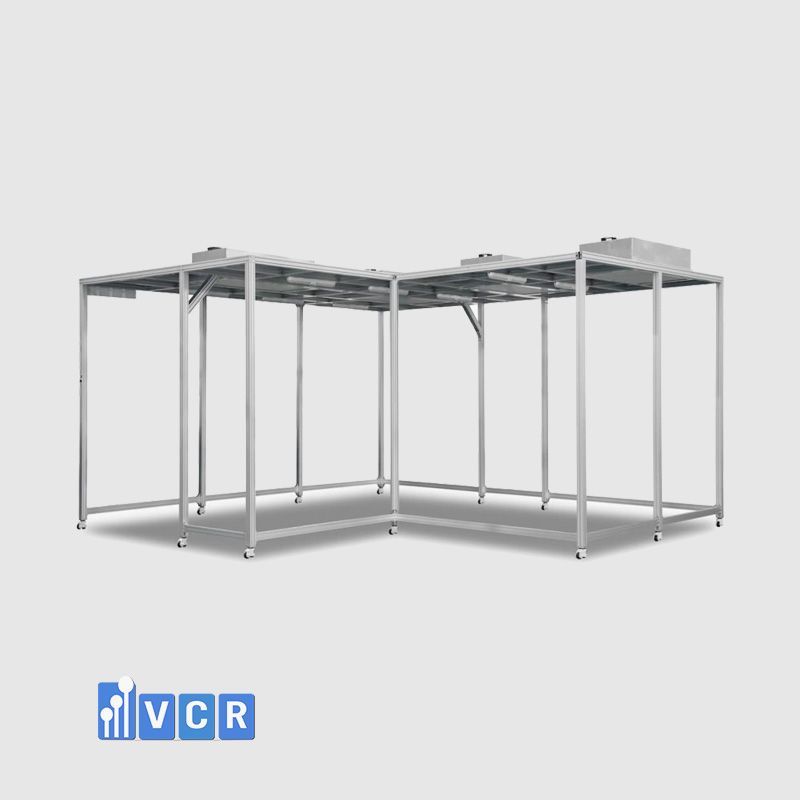

- What is a modular cleanroom in electronics?
- When should modular be used instead of traditional construction?
- Basic structure of a modular cleanroom
- Airflow design in modular cleanrooms
- Differential pressure and pressure cascade
- HVAC integration – centralized or decentralized?
- ESD control requirements
- Temperature and humidity control
- Monitoring and control systems
- Advantages of modular cleanrooms
- Limitations of modular cleanrooms
- Common design mistakes
- Impact on yield and operation
- Recommended design approach
- Conclusion: How to design a modular cleanroom for electronics?
In real-world implementation, “Vietnam Cleanroom equipment VCR” observes that modular cleanrooms are becoming a major trend in the electronics industry due to fast installation, scalability, and CAPEX optimization. However, many projects mistakenly treat modular as simply “quick assembly” while overlooking the most critical requirement: the system must achieve the same airflow, pressure control, and environmental performance as a traditional cleanroom. Modular is not a simplified solution—it is a more flexible one that still requires rigorous engineering.
What is a modular cleanroom in electronics?
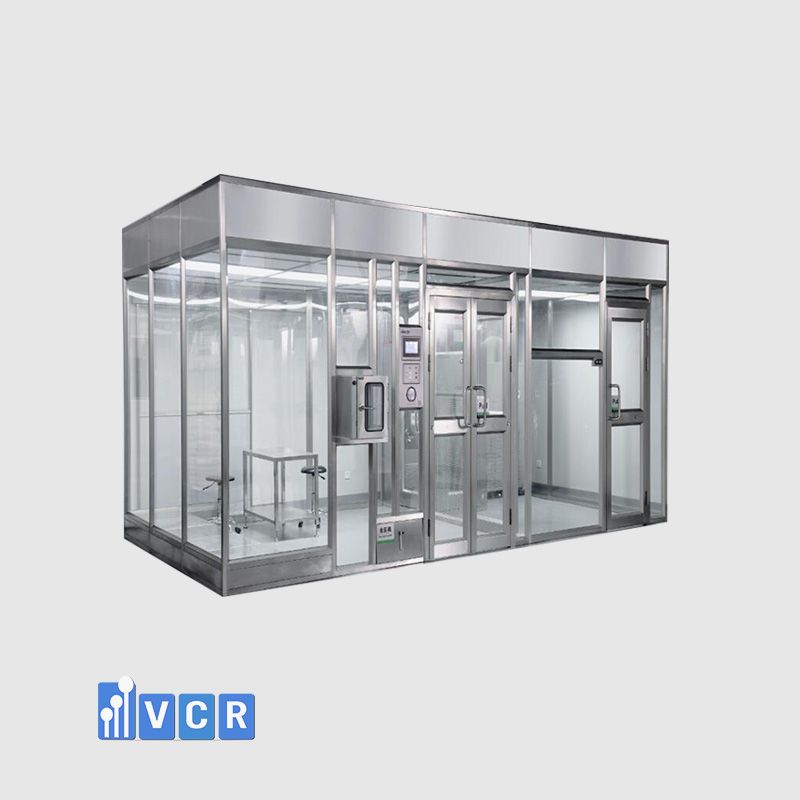
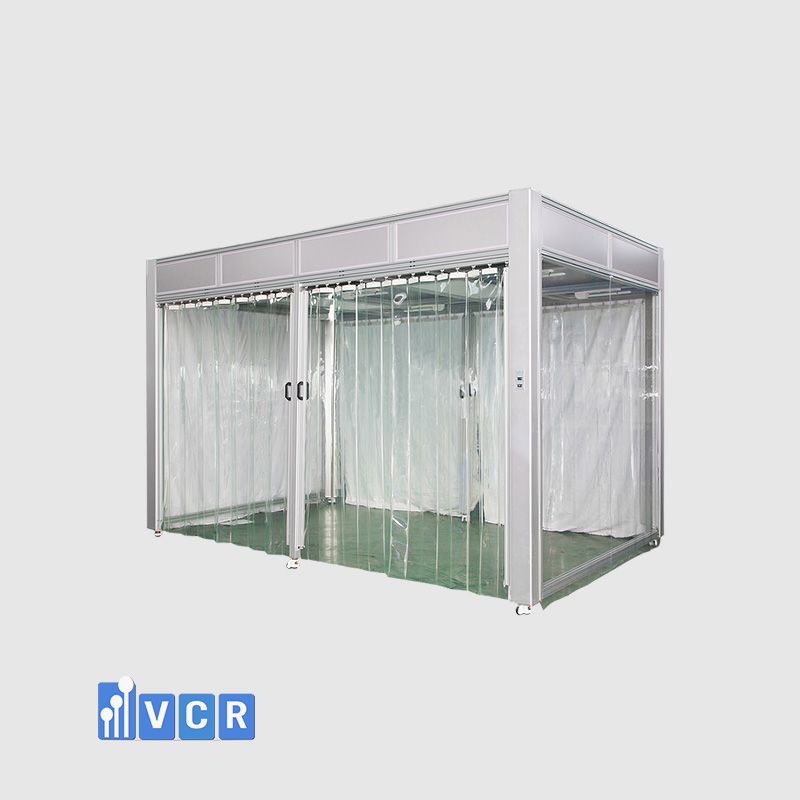
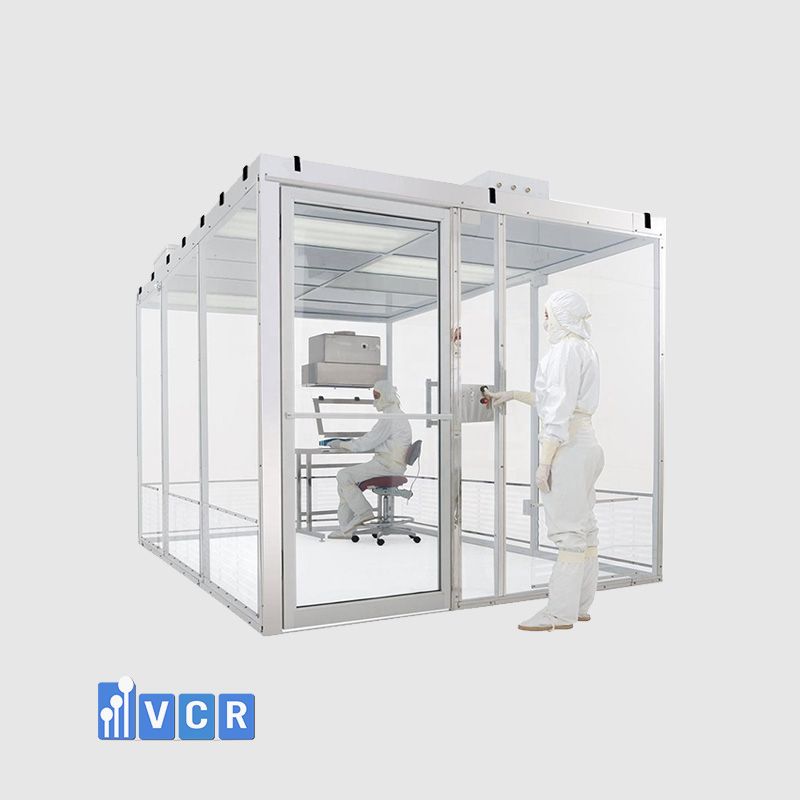
A modular cleanroom is constructed using standardized prefabricated components such as wall panels, ceilings, floors, doors, and filtration units (FFU or HEPA boxes). These modules are assembled on-site, allowing rapid installation and easy reconfiguration. In electronics manufacturing, this flexibility is valuable because production lines frequently change with new products and technologies.
When should modular be used instead of traditional construction?
Modular cleanrooms are ideal when fast deployment is required, when future expansion is expected, or when facilities are temporary or leased. They are commonly used in SMT, PCB assembly, and mid-scale electronics production, and even in some OLED applications. However, for large-scale semiconductor fabs requiring extreme stability, traditional stick-built cleanrooms are still preferred.
Basic structure of a modular cleanroom
A modular cleanroom typically includes wall panels (sandwich panels), ceiling grids, ESD flooring, doors (often with interlock systems), and air filtration systems (FFUs or HEPA units). These components are manufactured to standard dimensions for efficient assembly. Airtightness and installation precision are critical to system performance.
Airflow design in modular cleanrooms
Airflow is the most important design factor. Depending on the ISO class, systems may use turbulent airflow (ISO 7–8) or laminar airflow (ISO 5–6). Modular cleanrooms often use ceiling-mounted FFUs, which provide flexibility and scalability. The design must ensure uniform air distribution, avoid dead zones, and minimize turbulence.
Differential pressure and pressure cascade
Modular cleanrooms must follow the same pressure cascade principles as traditional cleanrooms. Typical pressure differences between zones range from 5–15 Pa, depending on cleanliness levels. Proper sealing of panels and doors is essential to maintain stable pressure and airflow direction.
HVAC integration – centralized or decentralized?
Two approaches exist: integration with a central HVAC system or using decentralized FFU-based systems. Modular cleanrooms often favor FFU-based designs due to flexibility and ease of expansion. However, system capacity and control coordination must be carefully managed to avoid imbalance.
ESD control requirements
ESD protection is mandatory in electronics environments. This includes conductive flooring, grounding systems, ionizers, and ESD-safe materials. Modular design must fully integrate these elements without compromising performance.
Temperature and humidity control
Temperature and humidity must be maintained within stable ranges through HVAC or dedicated systems. In modular cleanrooms, improper integration can lead to instability, so thermal and moisture loads must be calculated during design.
Monitoring and control systems
Modular cleanrooms require monitoring systems for particle levels, pressure, temperature, and humidity. These can be integrated with BMS or standalone control systems. Continuous monitoring ensures stable operation.
Advantages of modular cleanrooms
- Fast installation
- Flexible layout changes
- Easy scalability
- Lower initial investment
These benefits are only realized when the system is properly engineered.
Limitations of modular cleanrooms
- Difficult to achieve ultra-high cleanliness (ISO 3–4)
- Requires high installation precision
- Performance depends heavily on material and construction quality
Common design mistakes
A common mistake is treating modular cleanrooms as simple systems and neglecting airflow or pressure design. Poor sealing and improper installation also lead to environmental instability.
Impact on yield and operation
A well-designed modular cleanroom can perform as effectively as a traditional one. Poor design, however, leads to environmental fluctuations and reduced yield.
Recommended design approach
Start with product requirements and target ISO class. Then design airflow, pressure control, and ESD systems. Select appropriate modular structures and integrate HVAC and monitoring. Finally, ensure precise installation and validation.
Conclusion: How to design a modular cleanroom for electronics?
A modular cleanroom is an efficient and flexible solution when properly engineered. The key is not the modular concept itself, but ensuring compliance with airflow, pressure, and environmental control requirements.
Duong VCR