- What is an interlock system in electronics cleanrooms?
- How does an interlock system work technically?
- How does interlock control pressure cascade?
- How does interlock affect airflow?
- Does interlock help control contamination?
- What types of interlock systems are used?
- Can interlocks be integrated with BMS?
- What are common design mistakes?
- How do interlocks affect operation and productivity?
- Do interlocks require maintenance?
- How do interlocks impact yield?
- Is the investment in interlocks justified?
- How to design an effective interlock system?
- Conclusion: How does an interlock system control cleanrooms?
In real-world implementation, “Vietnam Cleanroom equipment VCR” observes that many cleanroom failures—such as pressure loss, contamination ingress, or airflow disruption—do not originate from HVAC systems but from uncontrolled door operation. A single incorrectly opened door can collapse the entire pressure cascade within seconds. The interlock system acts as an automated “operational discipline layer,” ensuring that cleanroom engineering principles are consistently maintained without relying solely on human behavior.
What is an interlock system in electronics cleanrooms?
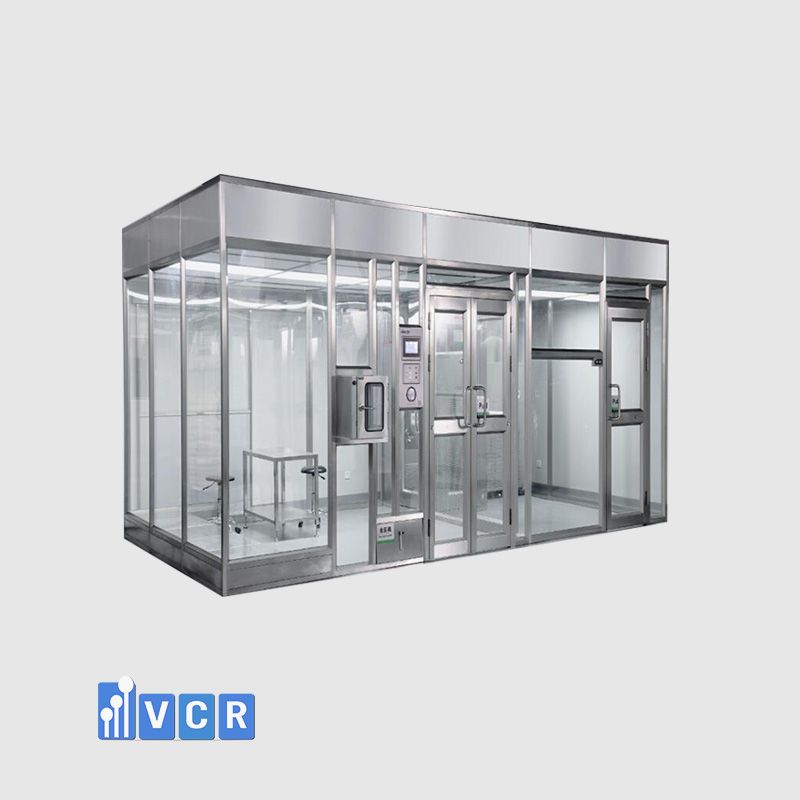
An interlock system is a mechanism that links two or more doors to prevent them from being opened simultaneously. In electronics cleanrooms, interlocks are commonly applied in airlocks, gowning rooms, Pass Boxes, and transition areas between different cleanliness levels. The primary purpose is to control door operation sequences and prevent uncontrolled air exchange. Interlocks can be mechanical, electronic, or integrated into a Building Management System (BMS), depending on system complexity and requirements.
How does an interlock system work technically?
Technically, an interlock system operates based on door status signals. When one door is opened, the system automatically locks the other connected doors. Only when the first door is fully closed can the next door be opened. In electronic systems, sensors, controllers, and electromagnetic locks coordinate to enforce this logic. Advanced systems may include delay timers or pressure conditions before allowing the next door to open, ensuring environmental stability before transition. In modern cleanrooms, programmable logic allows interlocks to adapt to different operational scenarios.
How does interlock control pressure cascade?
Pressure cascade ensures that air flows from cleaner areas to less clean areas. If two doors between zones are opened simultaneously, pressure equalizes instantly, and airflow direction can reverse. Interlocks prevent this by ensuring only one door opens at a time. This maintains pressure stability and ensures airflow follows the intended direction. This is the most critical function of interlocks in cleanroom environments.
How does interlock affect airflow?
Cleanroom airflow is carefully designed to remove particles efficiently. Simultaneous or uncontrolled door opening disrupts this flow, creating turbulence, vortices, and potential contamination pathways. Interlocks help maintain airflow integrity by preventing such disturbances. In areas requiring laminar flow, maintaining airflow stability is essential, and interlocks play a key supporting role.
Does interlock help control contamination?
Yes, very effectively. Uncontrolled door openings allow both particles and airborne molecular contamination (AMC) to enter clean areas. Interlocks minimize this risk by controlling air exchange. In airlock zones, interlocks combined with positive pressure create a dual-layer contamination barrier.
What types of interlock systems are used?
Interlocks are generally categorized as mechanical or electronic. Mechanical interlocks use physical locking mechanisms and require no power but offer limited flexibility. Electronic interlocks use sensors and electromagnetic locks, allowing precise control and integration with monitoring systems. In modern electronics cleanrooms, electronic interlocks are standard due to their flexibility and monitoring capabilities.
Can interlocks be integrated with BMS?
Yes. In advanced systems, interlocks are integrated with Building Management Systems (BMS) to enable monitoring, logging, and control. This allows tracking of door status, recording operational history, and detecting abnormal behavior. Additional logic can be implemented, such as allowing door opening only when pressure conditions are met or HVAC systems are stable.
What are common design mistakes?
A common mistake is designing interlocks without aligning them with pressure cascade and airflow requirements. Another issue is neglecting emergency override functionality, which can complicate incident response. Additionally, failing to account for personnel and material flow can create operational bottlenecks.
How do interlocks affect operation and productivity?
Interlocks can slow movement if poorly designed, especially in high-traffic areas. However, the benefits of contamination control and environmental stability far outweigh the time cost. A well-designed system balances safety and efficiency.
Do interlocks require maintenance?
Yes. Components such as electromagnetic locks, sensors, and controllers must be inspected regularly. Failure of interlocks can result in incorrect door operation and loss of contamination control. Maintenance is essential for reliable performance.
How do interlocks impact yield?
By maintaining stable pressure and airflow, interlocks reduce contamination risks and improve product quality. This leads to lower defect rates and higher yield in electronics manufacturing.
Is the investment in interlocks justified?
Interlock systems represent a small portion of total cleanroom cost but provide significant value. A single contamination event caused by improper door operation can result in losses far exceeding the cost of interlocks.
How to design an effective interlock system?
Effective design starts with identifying critical transition points. Logical door control sequences must align with pressure cascade and airflow design. Integration with HVAC and BMS ensures system-wide coordination. Operator training is also essential for proper usage.
Conclusion: How does an interlock system control cleanrooms?
An interlock system is one of the most critical elements in maintaining operational discipline in cleanrooms. It ensures that pressure and airflow integrity are not compromised by human actions. A stable cleanroom requires not only proper design but also a reliable and well-integrated interlock system throughout its lifecycle.
Duong VCR