
- What is laminar flow in electronics cleanrooms?
- What is turbulent flow in electronics cleanrooms?
- What is the main difference between laminar and turbulent flow?
- Why is laminar flow important in electronics cleanrooms?
- What are the advantages of turbulent flow?
- What are the disadvantages of laminar flow?
- What are the disadvantages of turbulent flow?
- When should laminar flow be used?
- When should turbulent flow be used?
- How does laminar flow affect airflow?
- How does turbulent flow affect airflow?
- Does laminar flow require more HEPA filters?
- How does turbulent flow use HEPA filters?
- Is laminar flow energy-intensive?
- Is turbulent flow more energy-efficient?
- Is laminar flow easy to maintain?
- Is turbulent flow easier to maintain?
- Can laminar and turbulent flow be combined?
- What does ISO 14644 specify about airflow?
- How to choose between laminar and turbulent flow?
- How do laminar and turbulent flow affect product quality?
In real-world implementation, “Vietnam Cleanroom equipment VCR” recognizes that choosing between laminar flow and turbulent flow is not merely an airflow design decision, but a critical factor affecting cleanliness level, production efficiency, and operational cost. Each principle suits different zones and contamination control objectives within an electronics cleanroom.
What is laminar flow in electronics cleanrooms?
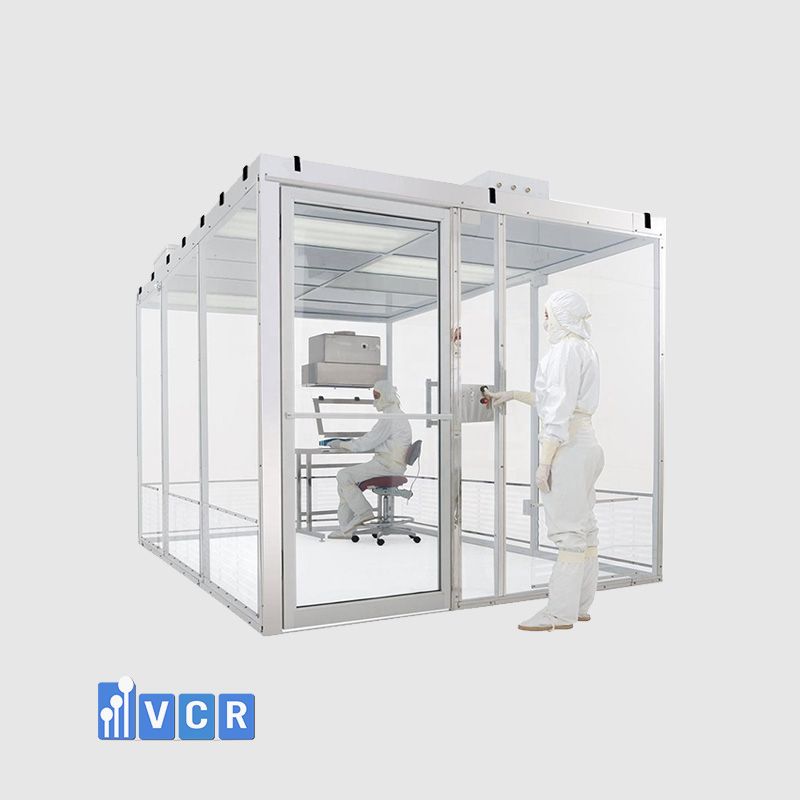
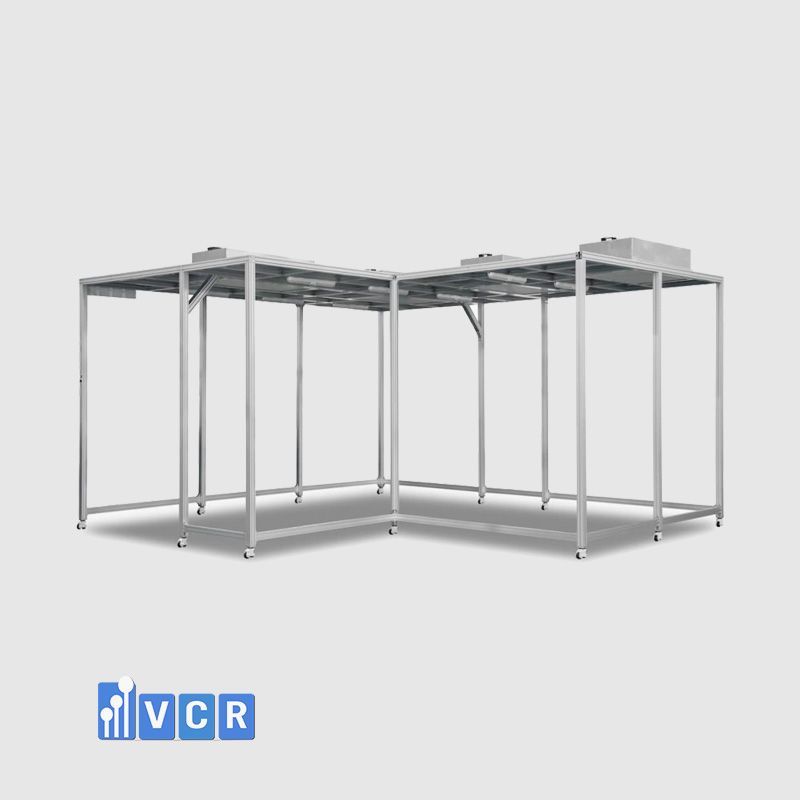
Laminar flow is unidirectional airflow that moves in parallel layers at a constant velocity, typically from top to bottom or from back to front. Clean air, after passing through HEPA/ULPA filters, is evenly distributed to form an “air curtain” that sweeps particles away from the working area. In electronics cleanrooms, laminar flow is commonly used in high-grade zones such as ISO Class 5–6, where strict particle control is required.
What is turbulent flow in electronics cleanrooms?
Turbulent flow is non-directional, mixed airflow where clean air is supplied and diffused throughout the space, mixing with existing air before being returned through exhaust systems. This method is typically used in lower-class cleanrooms such as ISO Class 7–8, where contamination control requirements are less stringent compared to precision electronic manufacturing zones.
What is the main difference between laminar and turbulent flow?
The key difference lies in airflow direction and stability. Laminar flow provides a stable, unidirectional airflow that effectively removes particles, while turbulent flow relies on air mixing and dilution to reduce particle concentration. Laminar flow is suitable for high-cleanliness areas, whereas turbulent flow is used for less critical zones. The choice depends on ISO classification and process requirements.
Why is laminar flow important in electronics cleanrooms?
In electronics manufacturing, components are extremely sensitive to microscopic particles. Laminar flow immediately removes contaminants from the workspace, preventing particle deposition on products. This significantly reduces defects and improves product reliability, making laminar flow essential for critical production areas.
What are the advantages of turbulent flow?
Turbulent flow offers lower initial investment cost and simpler system design compared to laminar flow. It is easier to install, more energy-efficient, and suitable for areas that do not require ultra-high cleanliness. It also provides greater flexibility in cleanroom layout design.
What are the disadvantages of laminar flow?
Laminar flow requires higher investment due to the need for dense HEPA/ULPA filter coverage and precise airflow control systems. It also consumes more energy because of high airflow rates and continuous operation. Maintenance requirements are stricter to ensure consistent performance.
What are the disadvantages of turbulent flow?
The main drawback of turbulent flow is lower particle control efficiency. Due to air mixing, particles can remain suspended longer and may re-contaminate surfaces. This makes turbulent flow unsuitable for high-precision electronic manufacturing environments.
When should laminar flow be used?
Laminar flow should be used in critical production areas such as semiconductor assembly, wafer processing, or any process requiring ISO Class 5–6 environments. These areas demand maximum particle control to ensure product quality and prevent contamination.
When should turbulent flow be used?
Turbulent flow is suitable for support areas such as corridors, storage rooms, or packaging zones where cleanliness requirements are lower. It is an effective solution for reducing costs while maintaining acceptable cleanliness levels.
How does laminar flow affect airflow?
Laminar flow creates stable and directional airflow, ensuring efficient particle removal. Airflow is tightly controlled in both velocity and direction, eliminating dead zones and turbulence, which helps maintain a consistently clean environment.
How does turbulent flow affect airflow?
Turbulent flow creates mixed and less predictable airflow patterns. However, when designed with appropriate air change rates, it can still maintain required cleanliness levels through dilution. Its performance depends heavily on proper ACH design.
Does laminar flow require more HEPA filters?
Yes. Laminar flow systems typically require high-density HEPA coverage, often across the entire ceiling, to maintain continuous unidirectional airflow. This increases cost but ensures maximum cleanliness.
How does turbulent flow use HEPA filters?
Turbulent flow uses fewer HEPA filters, typically installed at key supply points. Clean air is introduced and mixed within the room rather than forming a unidirectional flow.
Is laminar flow energy-intensive?
Yes. Due to high airflow rates and continuous operation, laminar flow systems consume more energy than turbulent flow systems. Energy consumption must be considered during HVAC design.
Is turbulent flow more energy-efficient?
Yes. With lower airflow requirements and simpler design, turbulent flow systems generally consume less energy and reduce operating costs.
Is laminar flow easy to maintain?
Laminar flow requires strict maintenance and regular validation, including HEPA integrity testing, airflow measurement, and system performance checks to maintain effectiveness.
Is turbulent flow easier to maintain?
Yes. Turbulent flow systems are simpler in structure and require less intensive maintenance, though periodic inspection is still necessary to ensure performance.
Can laminar and turbulent flow be combined?
Yes. In practice, many electronics cleanrooms use a hybrid approach. Laminar flow is applied in critical zones, while turbulent flow is used in supporting areas to optimize both cost and performance.
What does ISO 14644 specify about airflow?
ISO 14644 does not mandate a specific airflow type but requires achieving defined cleanliness classes. The choice between laminar and turbulent flow depends on design strategy and contamination control objectives.
How to choose between laminar and turbulent flow?
The selection depends on cleanliness class, process requirements, budget, and operating cost. Laminar flow suits high-precision processes, while turbulent flow is ideal for less critical areas. A balanced design often combines both.
How do laminar and turbulent flow affect product quality?
Laminar flow minimizes contamination risk, improving product quality and reliability. Turbulent flow maintains baseline cleanliness but is not suitable for high-precision manufacturing. Choosing the right airflow strategy directly impacts production efficiency and defect rates.
Duong VCR